About (under construction)

Brief overview
Lorem ipsum dolor sit amet, consectetur adipiscing elit, sed do eiusmod tempor incididunt ut labore et dolore magna aliqua. Ut enim ad minim veniam, quis nostrud exercitation ullamco laboris nisi ut aliquip ex ea commodo consequat. Duis aute irure dolor in reprehenderit in voluptate velit esse cillum dolore eu fugiat nulla pariatur. Excepteur sint occaecat cupidatat non proident, sunt in culpa qui officia deserunt mollit anim id est laborum.
=========
Archive section going into more detail (separate page?)
History
- how it came to be started
- who made it
- funding
- two series
- closure 1 and closure 2
- rediscovery
- Significance
Lorem ipsum dolor sit amet, consectetur adipiscing elit, sed do eiusmod tempor incididunt ut labore et dolore magna aliqua. Ut enim ad minim veniam, quis nostrud exercitation ullamco laboris nisi ut aliquip ex ea commodo consequat. Duis aute irure dolor in reprehenderit in voluptate velit esse cillum dolore eu fugiat nulla pariatur. Excepteur sint occaecat cupidatat non proident, sunt in culpa qui officia deserunt mollit anim id est laborum.
How it was made
- emergence of offset litho technology
- growth of community/radical media
- technical process (link to this video?)
Lorem ipsum dolor sit amet, consectetur adipiscing elit, sed do eiusmod tempor incididunt ut labore et dolore magna aliqua. Ut enim ad minim veniam, quis nostrud exercitation ullamco laboris nisi ut aliquip ex ea commodo consequat. Duis aute irure dolor in reprehenderit in voluptate velit esse cillum dolore eu fugiat nulla pariatur. Excepteur sint occaecat cupidatat non proident, sunt in culpa qui officia deserunt mollit anim id est laborum.
Memories from former volunteers/readers
??? - Lorem ipsum dolor sit amet, consectetur adipiscing elit, sed do eiusmod tempor incididunt ut labore et dolore magna aliqua. Ut enim ad minim veniam, quis nostrud exercitation ullamco laboris nisi ut aliquip ex ea
??? - commodo consequat. Duis aute irure dolor in reprehenderit in voluptate velit esse cillum dolore eu fugiat
??? - nulla pariatur. Excepteur sint occaecat cupidatat non proident, sunt in culpa qui officia deserunt mollit anim id est laborum.
SE1 Stories and its collaboration with Southwark Archives
Lorem ipsum dolor sit amet, consectetur adipiscing elit, sed do eiusmod tempor incididunt ut labore et dolore magna aliqua. Ut enim ad minim veniam, quis nostrud exercitation ullamco laboris nisi ut aliquip ex ea commodo consequat. Duis aute irure dolor in reprehenderit in voluptate velit esse cillum dolore eu fugiat nulla pariatur. Excepteur sint occaecat cupidatat non proident, sunt in culpa qui officia deserunt mollit anim id est laborum
Acknowledgements
- Names of people who worked on the paper (reporters, writers, photographers, advertising, layout and design, distribution.
- LIst of outlets
- Funders of the SE1 paper
- Supporters of SE1 Stories
enim ad minim veniam, quis nostrud exercitation ullamco laboris nisi ut aliquip ex ea commodo consequat. Duis aute irure dolor in reprehenderit in voluptate velit esse cillum dolore eu fugiat nulla pariatur. Excepteur sint occaecat cupidatat non proident, sunt in culpa qui officia deserunt mollit anim id est laborum
Photos available to select from for illustrations
Does anyone have/know of any others?
Reference Text
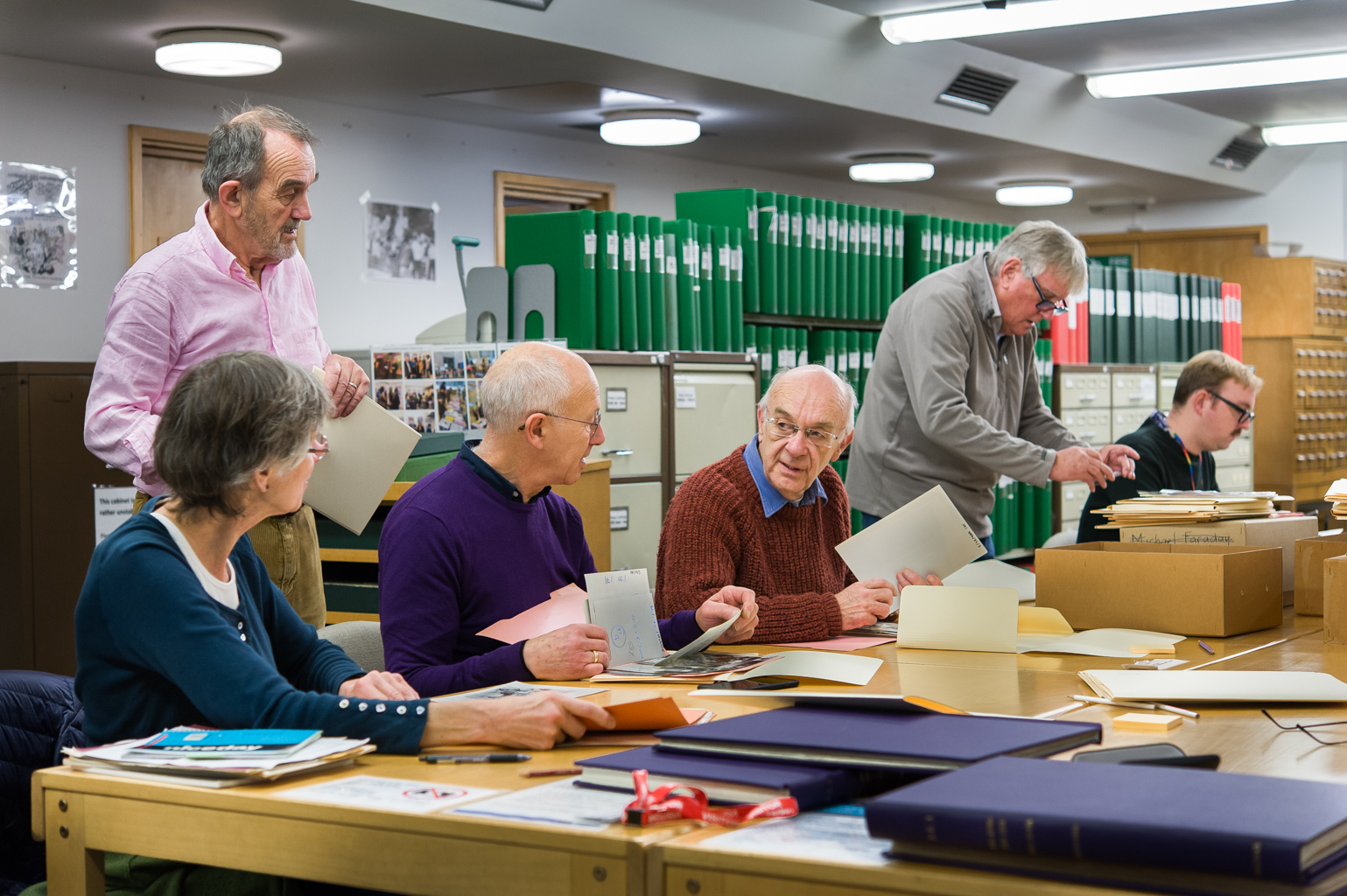
The ‘SE1 Stories’ Exhibition 2019-23
1. Background Produced monthly between July 1975 and November 1989 (?) (except for a few months’ break in 198?), the SE1 Community Newspaper recorded events, activities and issues in the lives of the people living in the parts of north Lambeth and North Southwark falling within the SE1 postal district. Put together by volunteers, it was made by the laborious process of typing copy up into columns (using a typewriter). The paper on which the copy was typed was then cut up and pasted onto one of 4 A2 sheets, leaving spaces for headlines and sub-headings (which were produced using Letraset - individual letters which were rubbed onto paper which was then cut up and pasted onto the A2 sheet); and also leaving spaces for photographs or other images, such as cartoons, or for advertisements placed by local shops and other businesses. Once complete, the A2 sheets were sent to a printer. When they returned, together with the 1500 or so printed copies of the paper, the photographs were stripped off the A2 sheets and tossed into a file cabinet, while the rest of the material went into the bin. When the paper finally stopped production, the accumulated photographs were gathered into 4 large cardboard cartons, and some years later these boxes ended up in the Archives of the London Borough of Southwark at the John Harvard Library. At some time in late 2019, one of those who had been involved in those activities 40 years previously became aware of the existence of this treasure trove, and alerted others who had played a part in producing the paper or in the activities recorded in the paper. They realised that this archive, consisting of about 3000(?) images, very few of which had any details written on the back of them, would lose its value once those who knew what they were and why they had been taken were no longer available to identify them. They knew they needed to find money to fund the work of digitising and then cataloguing the archive. With this in mind they decided to put together an exhibition, to demonstrate the value of this archive and publicise its existence. The work of devising this exhibition had barely begun when the pandemic hit, and so the whole process happened in Zoom discussions. One happy consequence of having to work through Zoom was that it enabled members of the group to participate who were living in different parts of the country and who would have found it difficult to attend regularly if meetings had been held in London (or any other one location). 2. Support for the venture The London Borough of Southwark made a grant from its ‘Blackfriars Stories’ fund, to pay for the production of display panels and display stands, and to defray the cost of transporting the exhibition from one venue to another once it was ready to be shown to the public. The Blackfriars Settlement, which had played a key role 50 years ago and is still serving the local area, kindly agreed to act as the recipient and manager of this grant. The architects’ practice Jack Carter Associates generously gave the time and expertise of some of its members to the work of designing both the exhibition panels and the frames to support and display them; and commissioning the production of these once designed. And the work could not have proceeded without the assistance of Chris Scales and his colleagues at the Southwark Archive. 3. The exhibition The exhibition tells, in 13 panels and some ancillary free-standing photographs, the story of the issues the communities of the SE1 area were facing in the years 1975-1989, and the activities of those who tried to bring them to the attention of decision-makers. The issues were many and varied, but included: poor quality housing, under-funded schools, chemists closing down, lack of facilities for youth, difficulties in accessing welfare benefits, cuts in local health care provision, and the growing incursion of hotel and office developments in an area where the actual need was for more housing and more light industrial employment to replace the many jobs in warehousing and other riverside enterprises that were disappearing as trade activities moved downstream or away altogether with the arrival of container shipping. Campaigns around these issues often involved civil disobedience or disruption, to oblige local or central government bodies to recognise the problems and to hear what local residents were saying they wanted to see done about them. All of them involved engaging as many people as possible in the activities, to impress on decision-makers the seriousness of the issues. The community newspaper played a role in all this activity, alerting readers to the issues, informing them what was being done about them, and encouraging them to participate in actions that were being planned. It also helped to publicise and develop the organisations which were crucial to these campaigns, such as tenants associations raising issues about the management of their estates; or the local organisations opposing planning applications for inappropriate developments. 4. On display By November 2020 the exhibition was ready to go on show. It was first displayed at the Blackfriars Settlement. The Settlement had played a key role, 45 years before, by setting up the Community Action Team to support local residents campaigning around issues of local concern, which had come up with the idea of the community newspaper; by hosting the Blackfriars Photography Project, which encouraged local residents - particularly young people - to take cameras out into the community and document lives and events in the area; and by being a hub which fostered connections between those campaigning around issues of concern in the local area. 5. The venues Since November 2020, the exhibition has been displayed to date in XX(?) venues, mostly in Southwark, but also in north Lambeth, and north of the river in Hackney at the London School of Architecture, and in Stratford at the Urban Room of University College, London. The full list of venues is as follows: Dates Venue Blackfriars Settlement Morley College OXO Gallery ,,,,,,, ,,,,,,,, 6. Reactions Inevitably, those taking the time to write in the ‘comments book’ which travelled round with the exhibition are more likely to be positive than otherwise. However, the following are reflective of the general reaction to the show of those writing in the book. …………………………….. …………………………….. ………………………………… 7. Further work While waiting to find funding for the work of digitising and cataloguing the photographic archive held by Southwark Council, the group have begun work to create two tools to help future generations understand the history which the archive documents. Memory Map The first is a ‘memory map’, which is an online map of the SE1 area, with various locations highlighted, and text explaining for each location the significance of that location in the history of the area – at least at the period being discussed. Guided tour app The second is an app to be downloaded to phone or tablet, which would guide the user on a walk around the area, identifying specific locations and giving links to the history or significance of each location. 8. Digitisation The really important work, though, is to get all the photographs in the archive digitised, and the digital images labelled and categorised in such a way that future generations can find them through a search mechanism and can know from the labels what the significance of each image is. We have been given an estimate of some £6,000 for this work, but digitising the images will be fruitless unless we also provide for the travel costs of those whose memories are going to be needed for the work of labelling the images and organising the cataloguing processes. So we think that a realistic sum for the project is £7,500. We would also like to provide for the cost of transporting the current exhibition to further venues as they come to our attention, so we would like to see a further provision of £1,000 for this continuing work. 9. The group Those who have been involved in this work since 2019 are: ……. With additional valuable support from Chris Liz …. And we wish to acknowledge ,,,,